Home > FAQs > Trade Partners, Pricing & Commercials > Page 2
From construction and materials to colour, sizing, customisation, care and production — explore the knowledge behind a bespoke rug.
Hospitality procurement is formal. We respond to RFPs professionally, provide competitive pricing, and flex on terms to work with your procurement processes. We understand POs, invoicing structures, and payment schedules. Our team is accessible and responsive to procurement requests.
Architects and designers are partners in our business. We provide professional support: detailed specs for documentation, trade pricing, flexible payment arrangements, and priority communication. We attend design meetings if helpful and collaborate on specification language.
RFPs work best when detailed. The more you specify, the better our proposal. If you’re open to design collaboration, we can propose options. Material preferences, timeline constraints, and budget parameters help us align proposals. We’re quick turnaround on RFP responses—typically 5–7 business days.
Specifications are formatted for architectural documentation. We include technical details, imagery, and care instructions. Specs are provided once designs are finalised. We also assist with specification language if you’re writing your own RFP.
Large projects warrant flexible terms. We work with your budget cycle and procurement schedule. Milestone payments (initial deposit, pre-production, post-production, upon delivery) are manageable. Discuss payment structure upfront so there are no surprises.
Design collaboration is valuable. We contribute to design discussions, address client questions, and support your presentation. Larger projects warrant in-person participation; smaller projects work via video. Let us know when your presence adds value.
Rather than formal affiliate programs, we cultivate direct relationships with designers and architects. Regular collaborators receive preferential terms, priority scheduling, and account management. If you’d like to discuss a partnership arrangement, let’s talk.
Trade pricing reflects designer margin expectations and business volume. A designer referring multiple clients annually might receive different terms than one-off projects. We’re flexible and discuss mutual benefit upfront. Volume commitments (e.g., $X annually) can unlock premium terms.
Simple budgeting: determine rug size first. Larger rugs cost more per square foot due to material volume. Material choice (wool vs. silk vs. synthetics) drives cost. Construction type (hand-knotted is priciest; hand-tufted and flatweaves are more affordable). Design complexity adds slightly. Provide a budget range early so we can propose appropriately.
These are rough ranges for typical residential sizes. A small hand-knotted (5×8 ft) might be $8K–$12K; a large one (10×14 ft) could be $40K+. Hand-tufted offers more budget-friendly luxury. Flatweaves are practical and affordable. Wall-to-wall pricing depends on room size and material. Discuss budget early so we propose appropriately.
Pricing scales with size significantly. A 5×8 ft rug costs much less than a 10×14 ft rug even in the same construction. Material matters: wool is moderate; silk adds luxury and cost. Synthetics are economical. Design complexity (intricate patterns cost more than simple designs) slightly affects price. Customisation is usually built into the price.
Value engineering is smart. A smaller rug in hand-tufted reduces cost by 50%+ versus large hand-knotted. Simpler pattern designs cost less than intricate ones. Material substitution (PET instead of wool-silk blend) reduces cost. We help find the right balance between aesthetic and budget.
Pricing formula is transparent: material cost + labour + overhead + margin. Larger rugs use more material, so cost scales with size. Labour-intensive constructions (hand-knotted) cost more. Complex designs require more skilled artisans. We itemise pricing in proposals so you understand the breakdown.
Direct labour comparison: hand-knotted takes 2–3x longer than hand-tufted for the same size. Each knot is individual work; each tuft is faster. This multiplies labour costs. Hand-knotted is also more durable, justifying premium pricing. Hand-tufted is an excellent value for beauty and durability.
Pure silk fibre costs significantly more than wool. Dyers and weavers require more expertise to handle silk without damage. Quality control is more rigorous. The result is a material that’s visually luxurious but more expensive to produce. Silk-wool blends offer balance.
Complex patterns aren’t drastically more expensive than simple ones. The primary cost driver is still size and construction, not design. However, very high-detail designs in hand-knotted do require premium artisans, adding cost. We discuss this during design development.
Value engineering is about prioritisation. If budget is tight, we help identify non-essential elements and suggest alternatives that preserve your vision. Smaller size, simpler pattern, more affordable material—these are honest trade-offs that don’t sacrifice quality. We’re transparent about what you’re gaining and losing.
Budget constraints are realistic. We work backwards from your budget and propose options that achieve your aesthetic within cost. You see what you’re paying for and decide what’s important. This transparency builds trust and often results in clients choosing unexpected combinations.
Find answers by the topic that matters to you.
Filter, explore, and discover the rug your space has been waiting for.
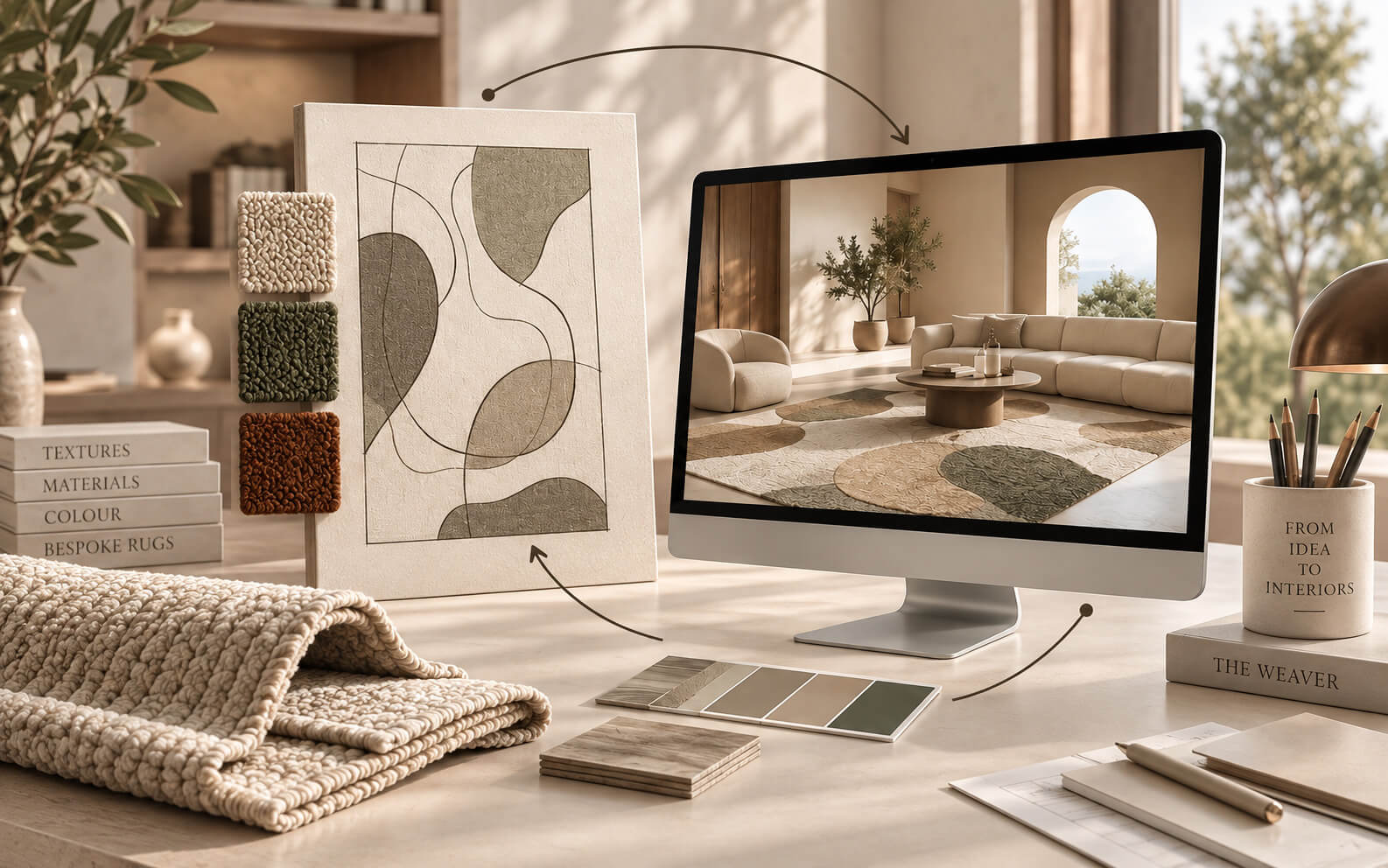
Share your design concept, moodboard, or sketch. Our craftsmen will translate it into a bespoke rug — any size, any material, any motif.
Tell us what you need. We’ll make it exist.
Customized rugs & carpets to match your unique requirements.